Digital Essentials for Small Business
Selling Online in Portugal: the Certified Invoicing Guide
2026-08-29 · 4 min read
The receipt your store platform emails the customer is not an invoice — and the Portuguese tax authority knows it. Who must use certified software, what ATCUD and the QR code are, and how to connect your store so invoices issue themselves.
In this article
There is a misunderstanding that costs fines: set up the online store, configure payments, watch orders come in — and assume the confirmation email the platform sends the customer settles the tax side. It does not. The platform's receipt is not an invoice, and in Portugal the invoice is not optional: it is mandatory on every sale, issued through means the tax authority (AT) recognises.
The good news: once set up, the circuit is almost entirely automatic. This guide explains what the law asks and how to connect the pieces. If you are a foreign founder selling into or from Portugal, this is one of the local rules that genuinely differs from what you may be used to.
Who must use certified software
The rule comes from Decree-Law 28/2019. You must issue invoices exclusively through software certified by the AT if, among other conditions, any of these applies:
- Turnover above €50,000 in the previous year (the threshold came down over the years to this value — much of the older information online still cites higher limits);
- You already use any invoicing software — using non-certified software stops being an option the moment you use any;
- You have organised accounting (in practice, virtually every company).
For online sellers the conclusion is simple: a serious store crosses one of these conditions quickly — plan for certified invoicing from day one and spare yourself a mid-game migration. Below the thresholds, with manual invoices through the tax portal, it is technically possible to live without software; for a store with volume, it is administrative masochism.
What the invoice must carry (and what the acronyms mean)
Invoices issued by certified software carry two elements you have seen on any modern Portuguese receipt:
- ATCUD — the unique document code, identifying a series previously registered with the AT;
- QR code — condensing the invoice's fiscal data, mandatory on most documents.
Beyond that, issued invoices must be reported to the AT (via SAF-T or webservice) within tight deadlines — currently in the first days of the following month, and the law's trend has been to shorten them. Working certified software handles this by itself; that is precisely what it is for.
A note for those invoicing companies and the state: structured e-invoicing has its own calendar, which is a separate conversation — this article is about stores selling to consumers.
Connecting the store to invoicing (the part that saves hours)
The most common mistake is not illegal — it is inefficient: the store on one side, the invoicing programme on the other, and someone retyping orders by hand between them every evening. Beyond the time, it is the recipe for forgotten and mismatched invoices.
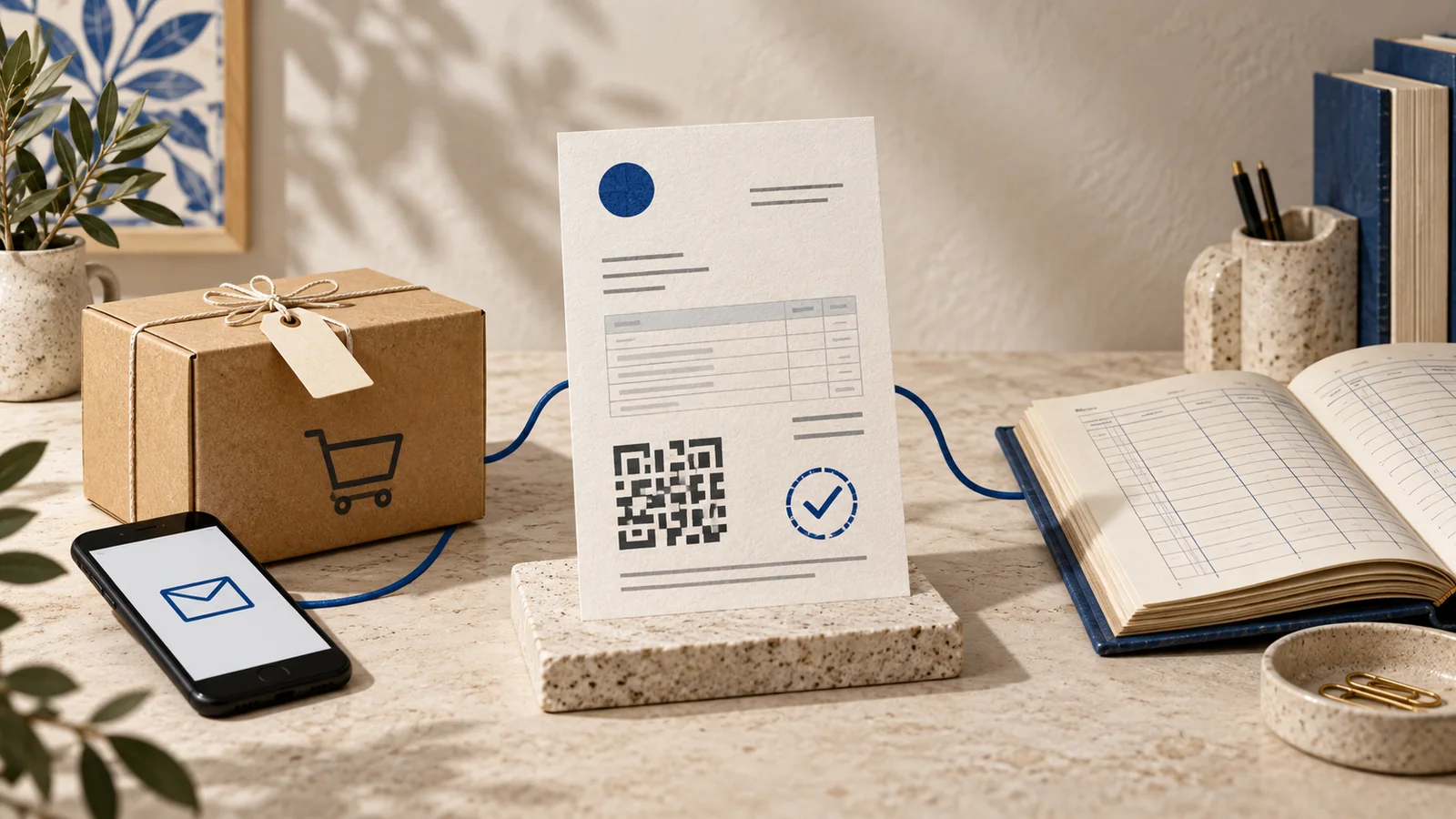
The right circuit is automatic: a paid order in the store triggers the invoice in the certified software, which issues it with ATCUD and QR, emails it to the customer and reports it to the AT. Zero human touches in the normal case.
How you get there depends on the platform:
- Portuguese invoicing programmes (several certified options exist — Moloni, InvoiceXpress, Vendus, among others) offer ready integrations with the common store platforms; quality varies, and this is the criterion to check before choosing a store platform, as we warned in our store-building guide;
- International platforms (Shopify and friends) do not issue certified Portuguese invoices natively — they always need one of these bridges;
- Custom stores connect by API to the invoicing programme, with your business rules (series, VAT per category, credit notes on returns) designed in from the start — which is what we build, and the difference shows precisely in the awkward cases: partial returns, shipping, mixed-VAT baskets.
The mistakes we see repeated
- "I'll sort invoices out when the AT asks." Invoices are reported monthly; their absence is visible to the AT without anyone asking anything.
- Confusing the confirmation email with the invoice. The customer may not even request it; the duty to issue exists regardless.
- Choosing the store platform first and thinking about invoicing later. The order is reversed: in Portugal, the invoicing bridge is a selection criterion, not a detail.
- Testing in production. Test orders generating real invoices reported to the AT cause disproportionate headaches — cancellations get reported too. Test environments exist for this.
As always: practical guide, not tax advice. Thresholds and deadlines keep changing — confirm current values with your accountant.
If you are building (or fixing) an online store and want the order → payment → invoice → AT circuit running hands-free, describe the project in our estimate form — you will get a concrete figure, and a frank answer on whether your current platform needs a bridge or a replacement.
Hear about new articles
Create a free account, confirm your email, and get one email when we publish something new. No lists sold, no drip machines.
Create a free accountThe account also lets you comment and like articles.
Comments (0)
No comments yet — start the conversation.
Sign in to join the conversation. Sign in · Create an account