Do You Really Need a Mobile App? What a PWA Is and Why It's Usually Enough
2026-08-24 · 6 min read
What a native app really costs to build and maintain, why most SME apps sit uninstalled, and the alternative that covers most cases for a fraction of the money — with a five-question decision table.
In this article
"We want an app." It comes up in estimate conversations all the time, and usually for sensible reasons: your customers live on their phones, the big brands all have apps, and an app feels like the obvious next step for a business taking digital seriously.
The honest answer is that most businesses do not need a native app. Building one buys you two expensive problems — maintaining it forever, and persuading anyone to install it. Meanwhile the things you actually want (an icon on the customer's home screen, notifications, bookings or purchases in two taps) are available today for a fraction of the cost.
This article puts numbers on both options, explains what a PWA is in one paragraph, and gives you a five-question table so the decision runs on arithmetic instead of fashion.
What a native app really costs — building is the cheap part
A native app is software installed from the App Store (iPhone) and Google Play (Android). For a business, that means three bills, not one:
- The build. A serious SME app — customer accounts, notifications, payments, an admin back office — typically runs €15,000–€40,000 in Portugal, more with integrations. "Template apps" exist at €3,000–€8,000 and carry the same problem as template websites: identical to everyone else's and hard to evolve.
- Two stores, two bureaucracies. Apple's developer account costs about €100/year; Google's about €25, once. Every update goes through review — hours to days of waiting — and either store can reject your app, or remove it after a policy change you had no say in.
- Maintenance. iOS and Android change every year, and an app that does not keep up starts breaking on new phones. The industry rule of thumb is 15–20% of the build cost per year — €3,000–€8,000 annually on a €20,000–€40,000 app. Forever, not once.
The build quote is the number in the proposal. The other two are the numbers in next year's accounts.
The empty-app problem
The bigger obstacle is not the price — it is the phone's home screen, the most contested real estate in digital life. The stores hold millions of apps, and the median SME app's download count sits uncomfortably close to "staff, friends and family". Installing is not using, either: retention studies consistently show most apps losing around three quarters of their users within days of install.
Run the numbers on your own customer base. With 2,000 customers, a 5% install rate gives you 100 installs. If a quarter still open it after a month — a normal result — you have 25 active users. On a €20,000 app, that is €800 per active user. There are few legal ways to spend money worse.
What a PWA is — in one paragraph
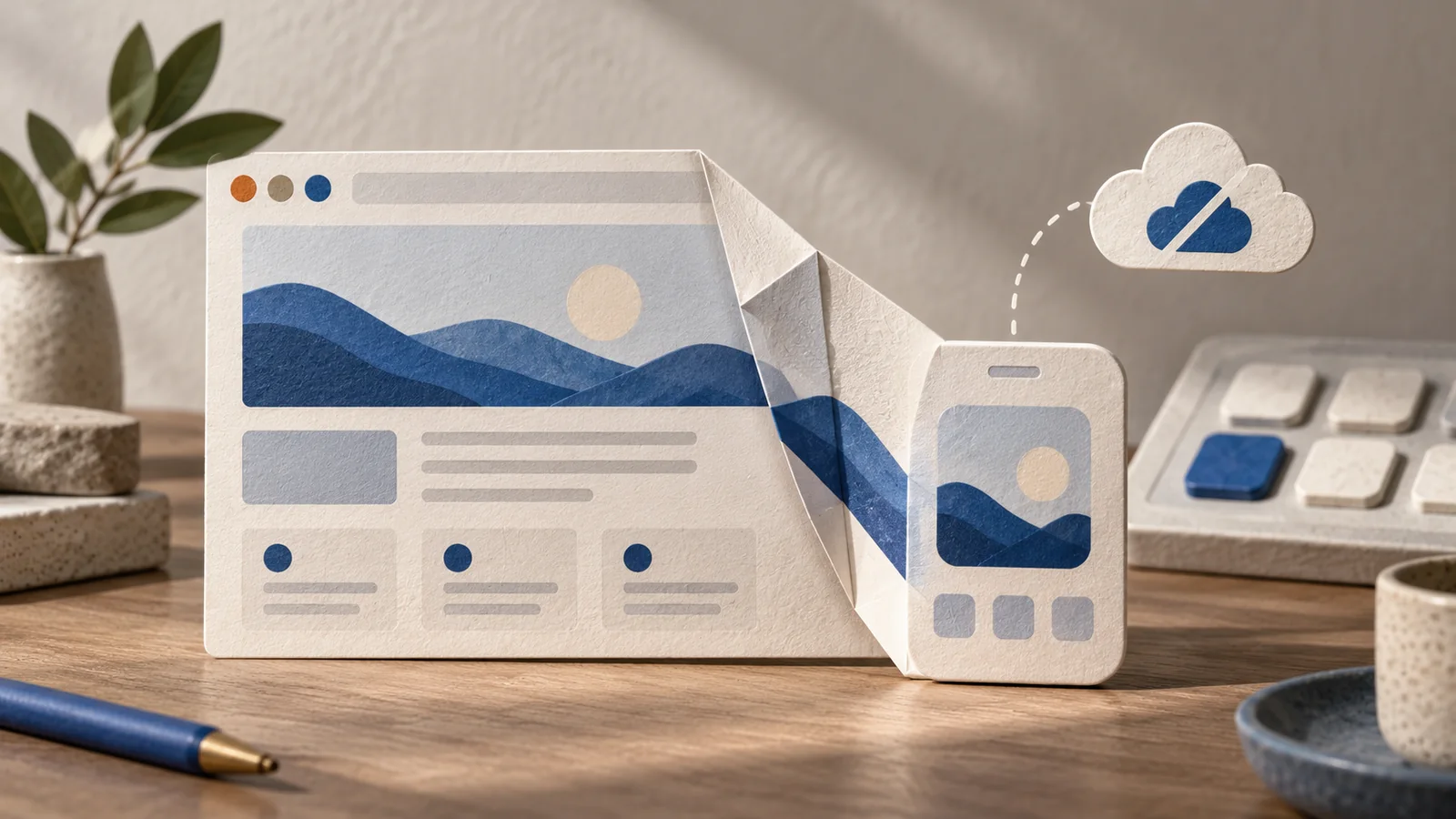
A PWA (Progressive Web App) is a website built to behave like an app: the customer opens it in the browser, taps "install", and gets an icon on the home screen; it opens full-screen, sends push notifications, and caches the essentials so it copes with a weak connection. It goes through no store: no Apple review queue, no second codebase, one build that is up to date the second you publish it — on phones and desktops at the same time.
Two limits, in the interest of honesty: on iPhone, push notifications only work after the user adds the PWA to the home screen (supported since iOS 16.4), and hardware access — Bluetooth, NFC, background sensors — is restricted compared with a native app. For most businesses, neither limit matters. For a few, it is decisive. Hence the table.
The decision table: five questions
Answer coldly — a "yes" only counts if the second column describes you:
| Question | Counts as "yes" if… |
|---|---|
| 1. Do customers use the service at least weekly? | Gym, daily coffee, frequent deliveries — not the occasional purchase |
| 2. Do you need the phone's hardware? | Bluetooth, NFC, continuous background GPS, advanced camera modes |
| 3. Do customers ask for an app unprompted? | You hear it without fishing for it, more than once a month |
| 4. Must it work fully offline? | Field work with no signal — not "sometimes the 4G drops" |
| 5. Can you fund maintenance, not just the build? | €3,000+/year, comfortably, every year |
Fewer than three "yes" answers: PWA — and often a good website with a client area covers it with room to spare. Three or more: a native app deserves a serious conversation, and the next step is pricing your specific case, not the general idea.
The three cases where a native app earns its keep
- Daily-habit loyalty with check-in. A gym where members badge in with their phone, check their plan and get the class reminder — the app lives in the pocket out of routine, not marketing. (If your need is mostly scheduling, compare the options in booking systems compared first.)
- Hardware. Bluetooth equipment, NFC locks and access control, sensor readings, printing on the move. Here a native app is not a luxury — it is the only thing that works.
- Marketplaces with network effects. Two sides of a business — the one ordering and the one delivering, the one booking and the one providing — both needing real-time notifications. The app is the product.
If your business is on this list, an app is not over-engineering; it is an operating cost. In that case, the next thing to read is the honest breakdown of what custom software costs.
A worked example: the café loyalty card
A café wants to replace the paper stamp card with something digital. Two routes:
The native-app route: €15,000–€30,000 to build, plus around €3,000/year to maintain. At €0.70 margin per coffee, paying back €20,000 takes roughly 28,500 additional coffees — additional, ones you would not have sold anyway — just to break even on the build. Maintenance adds another 4,300 coffees per year, every year. All of it assuming customers install the app at all, which the empty-app section has already answered.
The PWA route: a loyalty card inside your website, installable to the home screen, or a card for Apple/Google Wallet, costs a small fraction of a native app built to your brand (the figure depends on what the card has to do; a simple first version is a small project) — or €20–€50/month on an off-the-shelf service. In a €2,500 scenario, break-even is about 3,600 additional coffees: a realistic target for a year. And the customer downloads nothing from any store — they point their camera at a QR code on the counter and the card is on their phone.
Same outcome for the customer. A tenfold difference in risk.
The short answer
If you answered "yes" fewer than three times, a native app would be an expensive monument to a reasonable idea. Build the website or the PWA and spend the difference on bringing customers in — it funds years of marketing. If you answered "yes" three or more times, go ahead — with a written scope and maintenance budgeted from day one.
And if you want a number for your specific case — PWA, client area or a full app — describe it in two minutes and you will get an honest range back. Including, if it happens to be the truth, the answer "you don't need an app".
Hear about new articles
Create a free account, confirm your email, and get one email when we publish something new. No lists sold, no drip machines.
Create a free accountThe account also lets you comment and like articles.
Comments (0)
No comments yet — start the conversation.
Sign in to join the conversation. Sign in · Create an account